Selling Online
Lingerie and swimwear shop photos removed or ads rejected: why, and how to fix it
Last updated 2026-09-27From Plien Roob — AI model photography for online stores


The short answer: the problem is the image, not the product. Meta's and TikTok's official policy pages do not ban advertising lingerie and swimwear in Thailand, but a photo can have its audience restricted, be removed, or get an ad rejected when it shows nudity or near nudity, see-through fabric, a crop that focuses on a body part, or poses and words that read as sexual. So the fix is not to stop posting but to match each photo to its job: one set for your listings, and a more careful set for ads.
This page summarises official policy pages from Meta, TikTok, TikTok Shop Thailand and Shopee that Plien Roob read on 27 September 2026; each section names its pages and dates. Platforms can change their rules at any time and review every post and every ad themselves, so this article can only say which images carry higher or lower risk according to the policy wording. It does not guarantee that any image will pass, and it is not legal advice.
You can advertise it; the image has to pass
Meta's Advertising Standards page on Health and Wellness (latest change-log date 22 July 2026) places ads for lingerie, swimwear and undergarments among those that do not need the age targeting required for adult products, as long as they do not violate the Adult Nudity and Sexual Activity policy. On TikTok, the Other Products and Services page of the advertising policies (last updated August 2026) bans underwear, shapewear and swimwear ads only in a listed set of markets, and Thailand is not on that list.
The exception is a product that is itself in a prohibited group. Meta's Health and Wellness page does not allow ads for sexual arousal products, giving erotic costumes and fetish items as examples, and the Adult Content page of TikTok's advertising policies (last updated August 2026) does not allow sexual products, including sexual fantasy costumes. If your shop sells these, the problem is the product, and changing the image does not make it advertisable.
Meta's rules: posts versus ads
Ordinary posts on Facebook and Instagram fall under Meta's Community Standards, which apply to Facebook, Instagram, Messenger and Threads, and to AI-generated content too. The Adult Nudity and Sexual Activity page of the Community Standards (latest change-log date 28 August 2025) sorts images into two levels.
Removed: images with visible female nipples, except in breastfeeding or protest contexts, visible genitals, or close-ups of visible buttocks. The page says it removes both real photos and AI-generated images.
Viewable only by adults 18 and older: near nudity covered only by a digital overlay or an opaque object, certain nudity obscured by see-through clothing, and images where the crotch, buttocks or female breasts are the focus.
Ads are stricter. The Advertising Standards page on Adult Nudity and Sexual Activity (latest change-log date 14 May 2025) says ads cannot show nudity even where the Community Standards allow it in ordinary posts, cannot show near nudity such as nudity covered only by a digital overlay, and cannot show sexually suggestive activity. For images focused on the groin, buttocks or female breasts, and images of people in sexually suggestive poses, revealing clothing or stripping, the same page says ads should target users above the age of 18.
Meta's Business Help Centre page explaining the same policy is stricter still: it counts images focused on individual body parts as content that cannot run in ads, and gives examples of three kinds of violating image: near nudity, a person in a sexually suggestive pose, and a pose that simulates sexual activity. So the lower-risk ad image is one that clears both pages.
TikTok, TikTok Shop and Shopee rules
The Adult Content page of TikTok's advertising policies does not allow sexually suggestive content. The examples that apply directly to lingerie shops are emphasis on sensitive body parts, flirtatious movements, stripping or undressing, and swimsuits, lingerie or clothing that exposes or implies exposure of intimate areas.
Ordinary posts fall under the Sensitive and Mature Themes section of TikTok's Community Guidelines (effective 24 September 2026). Adult nudity is not allowed, including digital images. Significant adult body exposure, such as underwear that does not cover most of the buttocks, and sexualized framing, meaning a focus on clothed intimate body parts through camera angles, editing or positioning, are age-restricted and not eligible for the For You feed. Body exposure in everyday settings, such as wearing a swimsuit at a pool, is allowed. The guidelines also say TikTok infers intent from context: profile bio, hashtags, captions and sounds.
TikTok Shop Academy has a page in its creator policy section, Sexual Content (เนื้อหาสื่อเรื่องเพศในเชิงลามกหรืออนาจาร), covering content that promotes products and marked as applying to Thailand (dated 30 June 2025, shown on the Thai page as 30/06/2568). It covers content from both real people and digital characters, and gives these examples of risky content:
Camera angles or framing that draw attention to intimate body parts with no intent to show the product's fit or function.
Provocative poses, or sexually suggestive outfits, while promoting a product.
Suggesting that the person is nude, including blurring or censoring parts of the body.
Lingerie or swimwear showing the outline of private areas, such as a woman's nipples or a man's bulge. The English version of the same page adds that this includes the display of erotic lingerie, thongs and g-strings; the Thai version does not have that sentence.
Sexually suggestive text and emoji.
The same page recommends that intimate-apparel content explain the product's form and function, such as fabric, fit, support and design, that products be shown on real people or mannequins in a non-sexualized way, that people change clothes off camera, and that showing lingerie, underwear or swimwear be relevant to the product being promoted. TikTok Shop's Product Listing Guidelines (dated 16 March 2026) add that the content guidelines also apply to listing images and videos where relevant.
On Shopee, the Shop Ads content and creative guidelines (แนวทางปฏิบัติของเนื้อหาและสื่อโฆษณาสำหรับ Shop Ads) on the Shopee Ads site (undated, with a 2021 copyright line at the foot of the page) prohibit sexually suggestive images, including models undressing, wearing sexually suggestive clothing, or in sexually suggestive poses. Shopee's quality listing criteria page (dated 23 September 2025) prohibits inappropriate or illegal images, without giving separate examples for lingerie, so what counts as inappropriate is Shopee's call.
Which images carry more risk
The same image can stay up in your shop and still be rejected as an ad, because ads are held to a stricter standard. This table is assessed from the wording of the policy pages above.
Product only, flat or hanging, no person
- Listing or post
- Lower risk: no person in the image
- Ad
- Lower risk, unless the product is an erotic costume or fetish item
Ghost mannequin, or on a mannequin
- Listing or post
- Lower risk
- Ad
- Lower risk; TikTok Shop still asks for non-sexualized display on mannequins
Full-length model, plain pose, non-sheer outfit
- Listing or post
- Depends on how much the outfit covers; TikTok keeps significant body exposure out of For You
- Ad
- Meta says to target users above 18 when the clothing is revealing
See-through fabric showing skin
- Listing or post
- Meta may limit it to adults, and removes it if female nipples show
- Ad
- High risk: Meta bans near nudity; TikTok bans outfits implying exposure of intimate areas
Close crop on breasts, buttocks or crotch
- Listing or post
- Meta limits it to adults; TikTok age-restricts it and keeps it out of For You
- Ad
- High risk: both platforms name focus on body parts
Suggestive pose, undressing, or stickers or blur over the body
- Listing or post
- High risk: TikTok Shop counts blurring or censoring the body as implied nudity
- Ad
- High risk: Meta bans near nudity covered by a digital overlay; TikTok bans stripping
| This kind of image | Listing or post | Ad |
|---|---|---|
| Product only, flat or hanging, no person | Lower risk: no person in the image | Lower risk, unless the product is an erotic costume or fetish item |
| Ghost mannequin, or on a mannequin | Lower risk | Lower risk; TikTok Shop still asks for non-sexualized display on mannequins |
| Full-length model, plain pose, non-sheer outfit | Depends on how much the outfit covers; TikTok keeps significant body exposure out of For You | Meta says to target users above 18 when the clothing is revealing |
| See-through fabric showing skin | Meta may limit it to adults, and removes it if female nipples show | High risk: Meta bans near nudity; TikTok bans outfits implying exposure of intimate areas |
| Close crop on breasts, buttocks or crotch | Meta limits it to adults; TikTok age-restricts it and keeps it out of For You | High risk: both platforms name focus on body parts |
| Suggestive pose, undressing, or stickers or blur over the body | High risk: TikTok Shop counts blurring or censoring the body as implied nudity | High risk: Meta bans near nudity covered by a digital overlay; TikTok bans stripping |
What we recommend is two sets of images. The first is for your listings, where model photos are fine within the rules for ordinary posts. The second is for ads: product-only photos, ghost mannequin images, garments on a mannequin, or a full-length model in a plain standing pose with the whole outfit in view and no sheer fabric. This is our recommendation, not a platform rule.
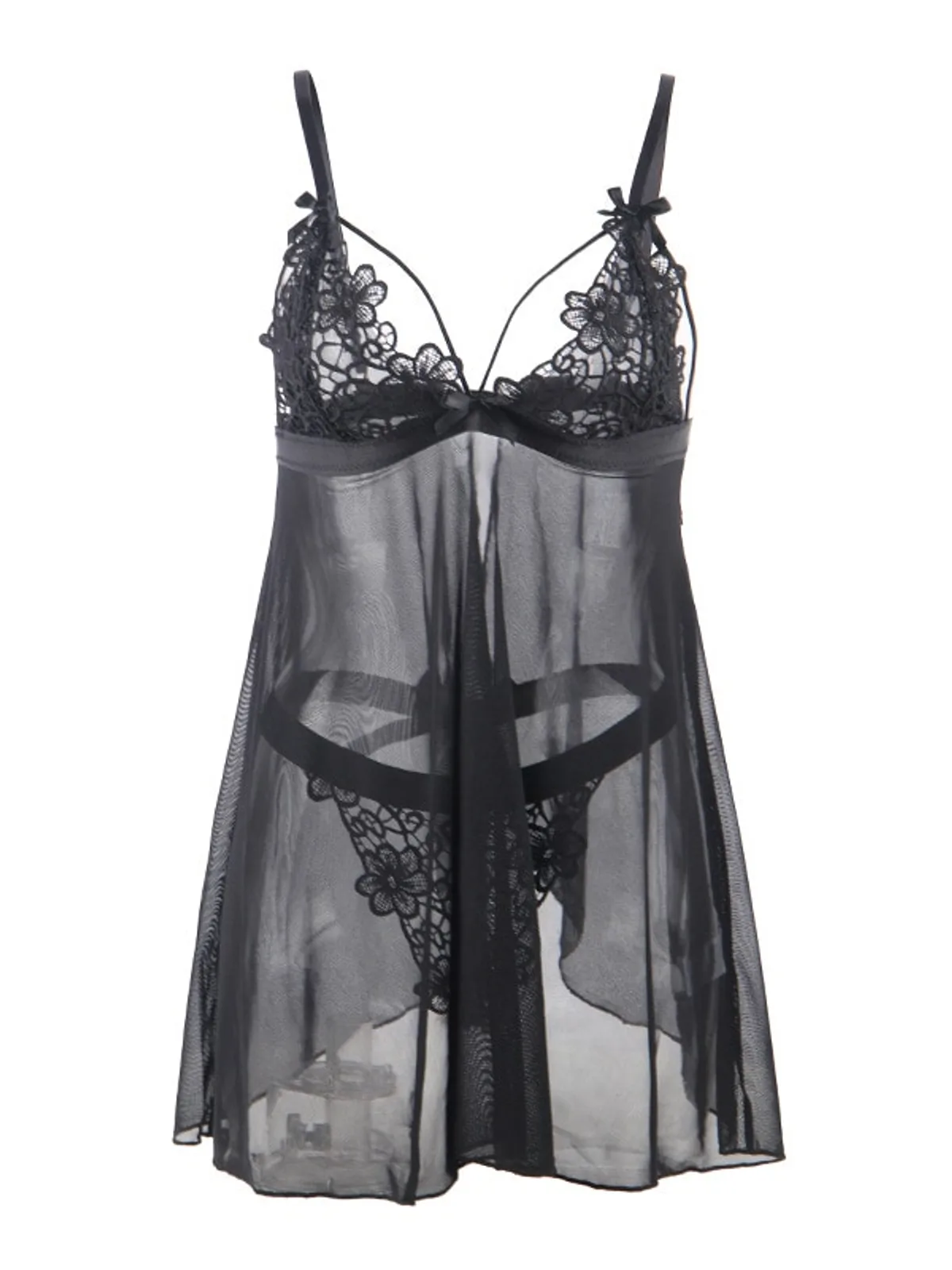 Flat on white
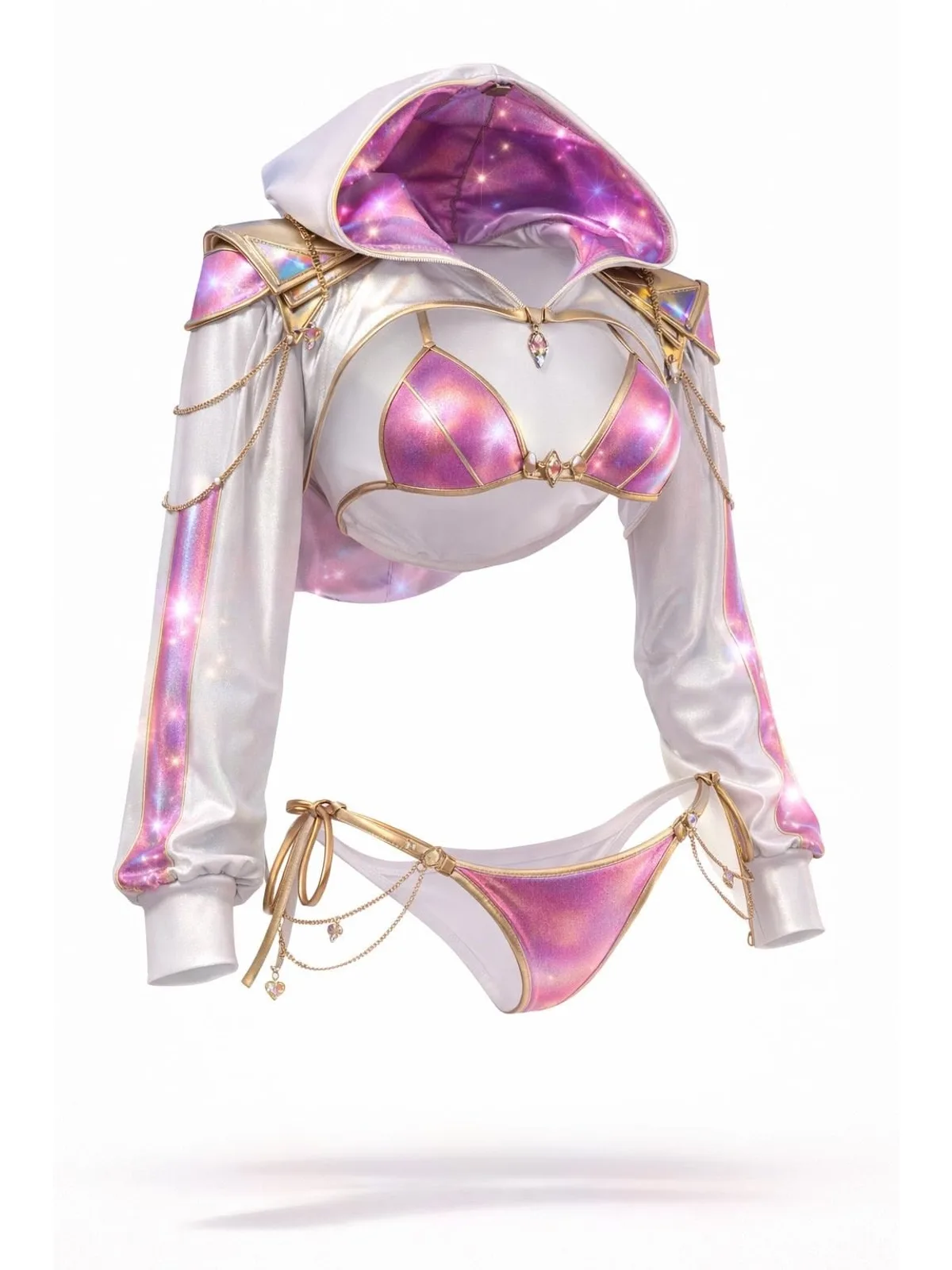 3D render
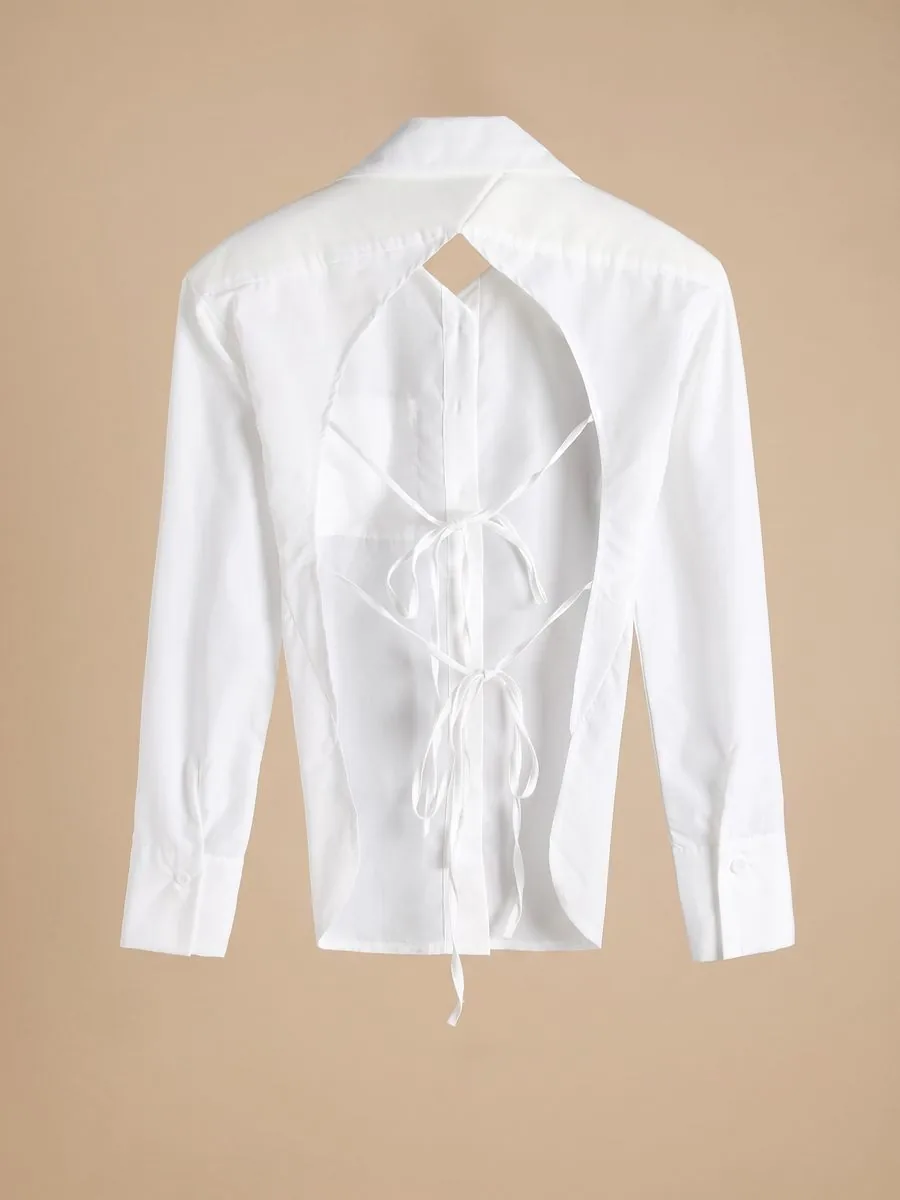 Uploaded
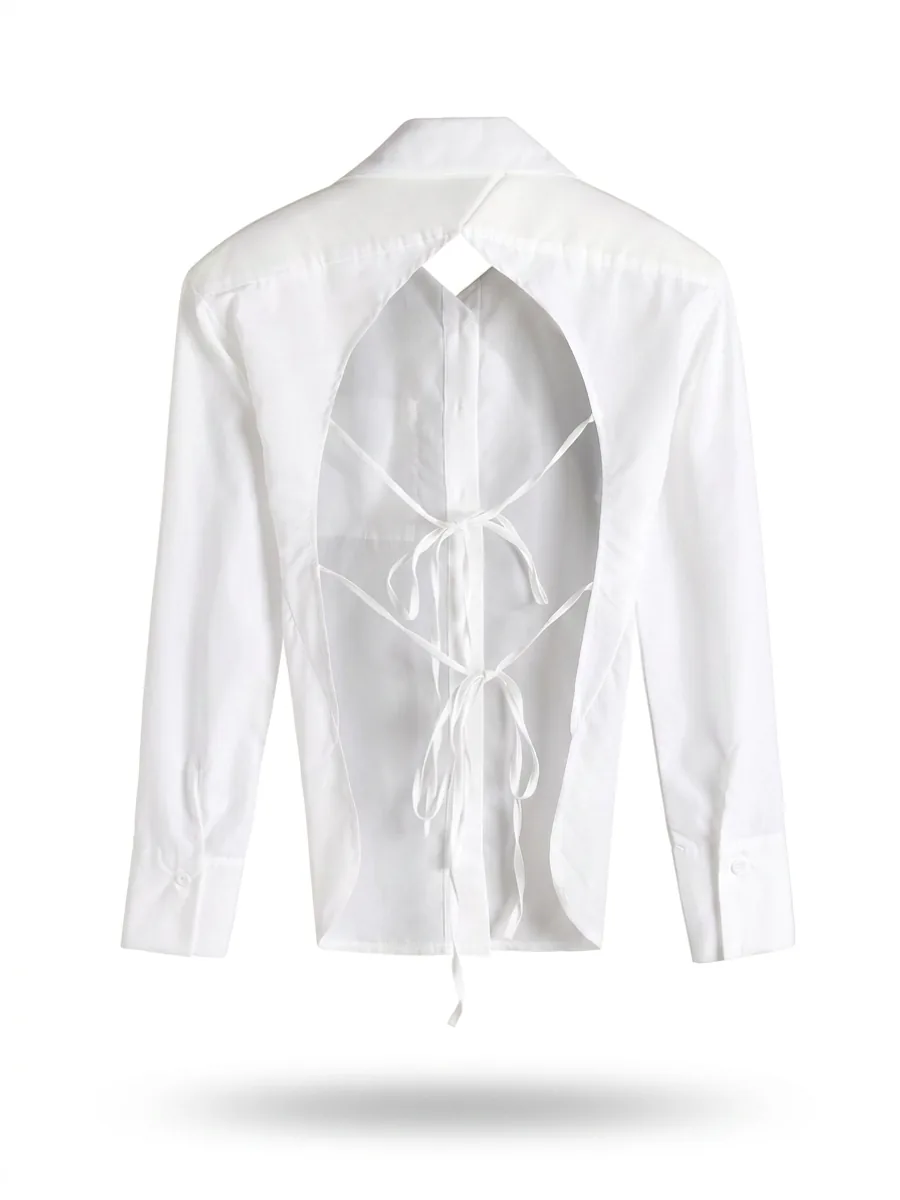 Ghost Mannequin
Check before you submit an ad
Zoom in to full screen: nothing normally covered shows through the fabric, and no outline of private areas is visible.
The crop does not focus on the breasts, buttocks or crotch, and the whole outfit is in view.
No stickers, emoji or blur over any part of the body, because Meta and TikTok Shop still count that as near nudity or as implying nudity.
A plain standing or seated pose, nothing provocative, and in videos nobody undresses or changes on camera.
Ad copy, hashtags, emoji and sounds are not sexually suggestive; talk about fabric, fit, support and design instead.
The person clearly looks like an adult; TikTok's Community Guidelines are far stricter for images of minors.
If the image shows a person in revealing clothing and the ad runs on Meta, target users above the age of 18.
The landing page the ad leads to must meet the same rules, because Meta says its ad review may check the landing page too.
Removed or rejected: what to do next
Meta's Introduction to the Advertising Standards says ad review relies mainly on automated tools and usually finishes within 24 hours, and that ads can be reviewed again at any time, including after they go live. So an ad that was approved can still be turned off later. When that happens, work through these steps in order.
Read the reason the platform gives first. In TikTok Ads Manager, go to Campaign, find the rejected ad and click its Disapproved label to see the explanation, then click View more for the policy details, including the placements and audiences affected
Fix the cause, whether that means a different image, a new crop that shows the whole outfit, or new ad copy, then resubmit. Meta says edited or newly created ads are reviewed as new ads, and TikTok sends an edited ad for another review
If you are sure the decision was wrong, ask for a review: on Meta, request one in Account Quality; on TikTok, appeal in Ads Manager; TikTok Shop sellers dispute through Seller Center and creators appeal through the app; and if a Shopee listing is suspended, the Prohibited Listings Policy page (dated 19 May 2026) points to the product suspension appeal form
Do not keep resubmitting an image that breaks the rules. TikTok Shop says repeated offences bring more significant penalties, and Meta says it may restrict the accounts of advertisers who do not follow its standards
How far our tools help
Plien Roob's sleepwear, lingerie and swimwear tool builds the female or male model from the buttons you choose and does not accept photos of real people. The product photo you upload must contain no person, and every result is checked before delivery: the person must clearly be an adult, a woman's nipples or areolae must not be visible, and nobody's genitals or their outline may be visible. An image that fails is not delivered, and the credits come back automatically.
But passing our check does not mean an ad will be approved. The check does not forbid sheer fabric, cut-outs or flattering poses, which platforms may restrict or reject in ads, and each platform reviews on its own. Poses marked with a warning sign in the tool show more of the body than the others, so avoid them for ads. For ad images with no person in them, Plien Roob's Ghost Mannequin tool shapes clothing on a white background with no person or mannequin in the shot. Compare every result with the real item before you use it.
Frequently asked questions
My lingerie and swimwear shop's photos get removed and ads rejected. What should I do?
Start by working out which rule the image hits. Meta's and TikTok's official policy pages do not ban advertising lingerie and swimwear in Thailand, but Meta removes images with visible female nipples, visible genitals or close-ups of visible buttocks, while see-through fabric, crops that focus on the breasts, buttocks or crotch, suggestive poses, and stickers or blur over the body can get the audience restricted or an ad rejected. The fix is two sets of images: model photos for your listings, and product-only, ghost mannequin or plain-pose model shots in non-sheer outfits for ads. Then read the reason the platform gives, fix the image and resubmit, or request a review if you think the decision was wrong. This comes from pages Plien Roob read on 27 September 2026 and is not legal advice.
Can I run Facebook ads for lingerie?
Yes. Meta's Advertising Standards page on Health and Wellness places ads for lingerie, swimwear and undergarments among those that do not need the age targeting required for adult products, as long as they do not violate the Adult Nudity and Sexual Activity policy. That policy bans nudity and near nudity in ads, including nudity covered only by a digital overlay, and says ads should target users above the age of 18 when an image focuses on a body part or shows people in sexually suggestive poses or revealing clothing. Meta's Business Help Centre page is stricter and counts images focused on a body part as content that cannot run in ads, so avoid crops that focus on the body in ads. Erotic costumes and fetish items are an exception and cannot be advertised. This comes from pages Plien Roob read on 27 September 2026 and is not legal advice.
If I cover private areas with a sticker or blur, will the ad pass?
It does not help. Meta's Advertising Standards count nudity covered only by a digital overlay as near nudity, which ads cannot show, and TikTok Shop Thailand's Sexual Content page counts blurring or censoring parts of the body while promoting a product as suggesting the person is nude. The fix is to change the image, for example to a product-only photo, a ghost mannequin image, or a model in a non-sheer outfit and a plain pose. This comes from pages Plien Roob read on 27 September 2026.
Why was my swimwear ad rejected on TikTok?
In Thailand, the product itself is not banned: TikTok's advertising policies ban swimwear and underwear ads only in a listed set of markets, and Thailand is not among them. But the Adult Content page (last updated August 2026) does not allow sexually suggestive content, such as emphasis on sensitive body parts, flirtatious movements, stripping, and swimsuits or lingerie that expose or imply exposure of intimate areas. You can see the actual reason in TikTok Ads Manager under Campaign by clicking the ad's Disapproved label, then fix the image, or appeal if you think the decision was wrong. This comes from pages Plien Roob read on 27 September 2026.
Can I use AI to make model photos in swimwear or lingerie and run them as ads?
On nudity and poses, AI images follow the same rules as real photos. Meta's Community Standards apply to AI-generated content, and TikTok Shop Thailand's Sexual Content page applies to digital characters too, so the image must not show nudity, see-through fabric, crops that focus on a body part, or suggestive poses. Plien Roob's Product-Sexy tool makes sleepwear, lingerie and swimwear images and checks every image before delivery against our own rules, but passing our check does not mean an ad will be approved, because each platform reviews on its own. For ads, product-only or ghost mannequin images are lower risk according to the policy wording. AI-generated images also come with a separate set of rules on Shopee and TikTok Shop about labelling them as AI.
Plien Roob