Selling Online
The supplier photos you can't actually use
Last updated 2026-09-07From Plien Roob — AI model photography for online stores
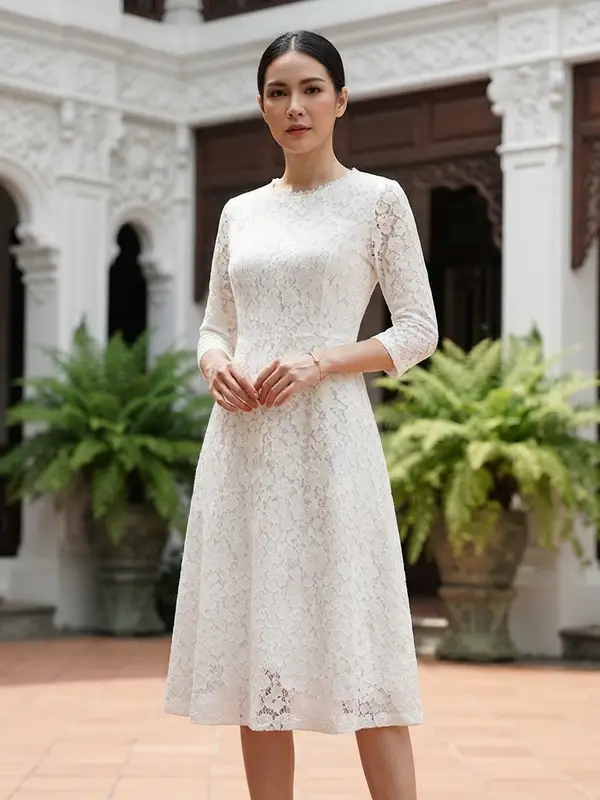

Personal shoppers, pre-order shops and secondhand sellers usually sit in the same position: they have two kinds of photo and no more. Whatever the supplier sent them, and the one shot they took themselves before the item went out. The item may already be sold or already with the buyer, so there is nothing left to reshoot.
 Illustration
What we found on 12 August 2026
While testing Plien Roob, we fed in a product photo that carried another site's watermark. The result came back as expected — a model wearing the item — except the other site's watermark had been copied into the output image along with everything else.
That leaves someone else's logo sitting on your photo. You cannot list it, and you cannot remove it afterwards, because it is not an overlay — it was drawn into the image from the start.
Why it happens
The system reads the source photo closely on purpose, because its main job is keeping the fabric, colour and any printed text faithful to the real item. To it, a watermark sitting on the cloth is part of the pattern on that cloth. It preserves it deliberately, rather than treating it as something foreign to be removed.
The rights question people skip
Supplier photos usually belong to the photographer or the brand, not to whoever resells the item.
Selling the same model of product does not give you a right to that seller's photos.
Photos saved from another website fall under the same rule, even when you physically hold the item.
Our legal information page covers this in more detail. We are not lawyers — what we publish there is what our system actually does, plus general points to be careful about.
The fix: one photo you took yourself
Before the item ships, take one photo on your phone. No studio, no lighting kit. That photo is unambiguously yours, and it can carry everything downstream — a model wearing it, a shaped shot with no person, and a different scene on every image — without the item ever being in your hands again.
 Illustration
Checklist before you upload
No watermark or logo from another site anywhere in the frame.
A photo you took yourself, or one you clearly have the right to use.
At least 1280 pixels wide, with focus locked on the item.
Shot in daylight near a window, with light coming from in front of the item rather than behind it.
The whole item visible, with no hand or hanger covering an important part.
How much sharpness actually matters
We measured this on the ghost mannequin tool with two Thai-print T-shirts, five runs each and every setting held constant. A sharp 1280px photo with large lettering held its shape 5 times out of 5. A blurry 720px photo with small lettering held it 3 out of 5, and garbled the Thai text printed on the shirt all 5 times. Stepping closer and tapping to focus before pressing the shutter is how you get a photo like the first one.
One warning specific to secondhand stock: used items have real flaws, and a photo that looks better than the item does misleads the buyer into a return — which costs more than the item not selling. Always publish honest photos of the flaws alongside, taken from the real item, and describe the condition accurately.
Frequently asked questions
Can I use the photos my supplier sent me?
It is risky. Supplier photos usually belong to the photographer or the brand rather than to whoever resells the item, and selling the same model of product does not give you a right to that seller's photos. Photos saved from another website fall under the same rule even when you physically hold the item. We are not lawyers — these are general cautions only.
My photo has another site's watermark on it. Will the system remove it?
No. We tested this on 12 August 2026 by feeding in a product photo carrying another site's watermark: the result came back as a model wearing the item, with the other site's watermark copied into the output. It cannot be removed afterwards, because it was drawn into the image from the start rather than laid over it.
The item is already sold and I cannot reshoot it. What now?
If you still have even one photo you took yourself, it can carry everything downstream — a model wearing the item, a shaped shot with no person, and a different scene on every image — without the item ever being in your hands again. If you have no photo of your own, we cannot help, because there always has to be a source photo you have the right to use. The habit that prevents this is one phone photo before every item ships.
What should I watch out for when selling secondhand?
Used items have real flaws, and a photo that looks better than the item misleads the buyer into a return, which costs more than the item not selling. Publish honest photos of the flaws taken from the real item alongside, and describe the condition accurately.
Plien Roob
Ready for your first product photo?
Photos by m0851 · ian dooley on Unsplash